Oct 08, 2026
If you have been training consistently but your muscles are growing more slowly than someone else’s, does that make you a non-responder?
A slow response over one training block cannot establish that your muscles are incapable of growing. It describes an outcome under particular conditions: the exercises you performed, the training dose, the period you measured, and the method used to measure it. Before treating that result as a biological identity, we need to separate those conditions from the person.
There are genuine differences in how people adapt to resistance training. But the difference between two before-and-after measurements is not a direct reading of genetic potential. The useful question is whether the result is reliable, whether the training was appropriate, and what can reasonably be changed.
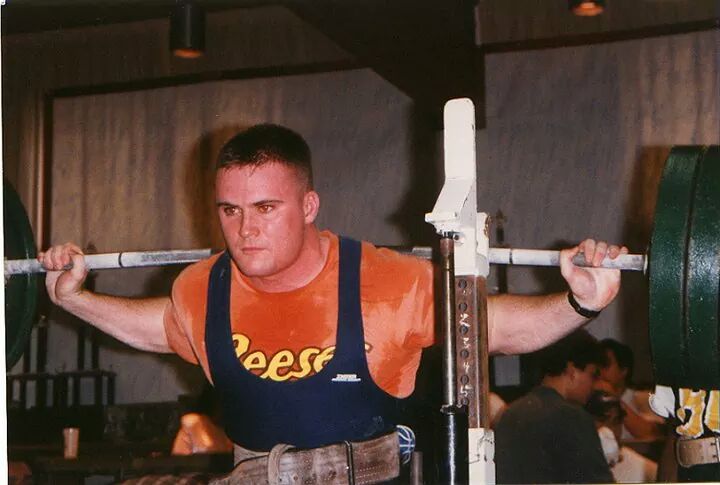
A study by Christopher Mobley and colleagues provides a good starting point. Sixty-seven untrained, college-aged men completed twelve weeks of resistance training, three times a week. The researchers measured the thickness of the vastus lateralis, one of the quadriceps muscles on the outside of the thigh, and collected muscle biopsies, blood samples, body-composition measurements, and strength tests.[1]
After training, they divided the men into low, moderate, and high responders according to the change in that thigh-muscle measurement. Average thickness increased by approximately 1.1 millimetres in the low group, 4 millimetres in the moderate group, and 6.9 millimetres in the high group.
Those groups were created from the observed results. They were not three biological categories established before training, and the low group was not a group in which nobody grew. Its average muscle thickness increased. Moreover, the separation in local thigh growth did not produce the same separation in whole-body lean-mass or squat-strength gains.
A person can therefore appear to respond poorly according to one measurement while improving according to another. Ultrasound thickness at one location, muscle-fibre size in a biopsy, whole-body lean mass, and strength describe related but different aspects of adaptation. Calling all of them simply “results” loses information that could change the conclusion.
The investigators also examined possible biological explanations. One was ribosome content. Ribosomes are the cellular structures that translate messenger RNA into protein. Increasing the machinery available for protein synthesis is a plausible part of how a muscle supports growth.
The study estimated ribosome density from total RNA in muscle tissue. Men with larger increases in total RNA tended to have larger increases in muscle thickness, but the relationship explained only about eight percent of the variation. It left most of the differences unexplained.
There is another statistical qualification. The main analysis did not establish that RNA changed differently across the three responder groups. The authors then performed exploratory comparisons because the numerical changes looked different. Finding a significant change within one group and no significant change within another does not, by itself, prove that the groups changed differently.[1]
These findings are useful for developing hypotheses. They do not establish a clinical test that can predict how much muscle a particular man will build. The RNA change was also measured across the training period, rather than being a baseline result available to prescribe his programme in advance.
The same restraint applies to hormones. This study did not find that serum total testosterone distinguished the responder groups. That does not mean testosterone has no role in muscle physiology. It means these data do not support using a testosterone result to explain every disappointing training block, or using the responder label as an indication for hormone treatment.
Suppose the first measurement of a muscle is slightly higher than its true size because of ordinary measurement error. Even if the second measurement is accurate, the calculated increase will look smaller. If the first reading was slightly low, the apparent increase will look larger.
This is part of the problem called regression to the mean: unusually high or low observations often become less extreme when measured again. It is particularly relevant when researchers relate the starting measurement to the change calculated from that same starting measurement. Mobley’s high-growth group started with thinner muscles, but that association cannot tell us how much reflected biology and how much reflected the way change was measured.
Hydration, recent exercise, positioning, and the exact site measured can also affect comparisons. A gym photograph, a tape measure, an ultrasound image, and a body-composition scan each have limitations. Repeating the same method under similar conditions reduces avoidable variation; it does not turn any method into a perfect measurement of new contractile tissue.
Researchers therefore need estimates of measurement error, suitable comparison groups, and ideally repeated training periods before making strong claims about individual responsiveness. Outside a research laboratory, the practical equivalent is to look for a pattern across repeated observations rather than treating one disappointing number as a diagnosis.
It would also be wrong to dismiss every difference between people as measurement error. A study published in 2025 examined two identical ten-week training periods, separated by ten weeks without training. Twenty previously untrained adults completed the repeated training, and a separate group of twenty-seven provided a non-training comparison.[2]
Responses in thigh and upper-arm muscle size were correlated between the two training periods. People who grew more in the first period tended to grow more in the second. This supports a reproducible component to individual adaptation, although the training sample was small and the second period followed previous training and detraining.
The investigators also found that nonresponse depended on the outcome being examined. Nobody was nonresponsive across all measured characteristics. The study supports taking individual differences seriously without declaring someone incapable of benefiting from training on the basis of one muscle or one test.
Sometimes the training dose is part of the explanation. In a 2024 study, eighty-five older adults trained one leg with a single set and the other with four sets of knee extensions, twice weekly for ten weeks. The leg assignment was randomised, allowing a comparison within the same person.[3]
Among those classified as nonresponders to the single-set condition, the higher-volume leg showed greater gains in quadriceps size and strength. This suggests that an inadequate dose can produce an apparent nonresponse. It does not establish that everyone should quadruple their programme: these were older adults, the exercise was specific, and the starting dose was low.
The starting point becomes especially important when comparing that result with a 2026 study of twenty-seven strength-trained male athletes. After an initial ten-week programme, one group performed roughly fifty percent more sets during a further seven-week phase. The extra volume did not produce a statistically significant advantage in muscle size or clearly reverse the low-response classification.[4]
That study was small, involved a specialised athletic population, and had a short additional-training phase and measurement limitations. It cannot define a universal upper limit. Taken together, these trials support evaluating the dose already being performed rather than assuming that more work will always correct slow growth.
Start by defining the problem. Is muscle size unchanged, is performance unchanged, or are both declining? Increasing repetitions with a previously difficult weight is useful progress, but it is not a direct measurement of hypertrophy. Equally, a small change in one circumference should not erase an improvement in physical function.
Next, examine what was actually done. A written programme and a completed programme are different things. Record sessions, exercises, sets, repetitions, and loads. Note whether technique and range of motion are consistent, and how demanding the sets are. Without that record, it is difficult to distinguish an ineffective prescription from inconsistent exposure to it.
Review food intake and recovery alongside the training. If muscle gain is the goal, chronically insufficient energy or protein is a plausible constraint. A supplement cannot be assumed to correct the problem before the overall diet has been assessed. Sleep disruption, illness, pain, and competing training demands also deserve attention, although the Mobley study did not establish how much these factors explained its responder groups.
Then change something you can evaluate. A person doing very little effective work may reasonably trial a modest increase in training volume. Someone already doing substantial work, with persistent fatigue and worsening performance, needs a different review. Keep enough of the programme stable that the result of an adjustment remains interpretable. Reassess over a sustained block, using comparable measurements, rather than replacing the entire plan after every difficult week.
Finally, distinguish ordinary slow progress from a health problem. New or progressive weakness, unexplained loss of muscle or body weight, or other persistent symptoms warrant clinical assessment. Slow visual changes in an otherwise well person are not, on their own, evidence of a hormonal disorder or a reason to start medication.
The conclusion is fairly straightforward. “Low responder” can be a useful description of a measured response to a particular programme. It is a poor substitute for examining the programme, the measurement, and the person. Use the result to guide the next assessment, rather than allowing it to define what your muscles will ever be capable of doing.
